Table of Contents
- Key Takeaways
- Quick Verdict
- Product Overview & Specifications
- Real-World Performance & Feature Analysis
- Design & Build Quality
- Performance in Real Use
- Ease of Use & Setup
- Durability & Long-Term Reliability
- Pros & Cons
- Pros
- Cons
- Comparison & Alternatives
- Cheaper Alternative: Vinyl ESD Mats
- Premium Alternative: 3M or Desco Industrial Mats
- Buying Guide / Who Should Buy
- Best For Beginners
- Best For Professionals
- Not Recommended For
- FAQ
- Do I need special equipment to ground this mat properly?
- How does this compare to anti-static mats?
- Can I cut the mat to fit my workbench?
- Is the 0.08″ thickness sufficient for soldering work?
- How often should I test the mat’s conductivity?
If you’ve ever watched a $500 microcontroller mysteriously fail after handling, or spent hours debugging a circuit only to find ESD damage, you understand why proper static protection isn’t optional. As someone who’s worked on everything from consumer electronics repair to aerospace component testing, I’ve seen the full spectrum of ESD mats—from flimsy vinyl sheets that curl up after a month to industrial-grade solutions that outlast the workbenches they’re placed on.
The Concord ESD Mat enters a crowded market with promises of dual-layer rubber construction and robust protection. But does it deliver real-world value for electronics professionals, or is it just another generic option? After putting it through rigorous testing in both workshop and production environments, I’ll break down exactly where this mat excels, where it falls short, and who should seriously consider it.
Key Takeaways
- The Concord’s dual-layer rubber construction provides excellent durability against soldering iron contact and chemical exposure
- Surface resistivity specifications (10^6-10^8 ohms top, 10^3-10^5 ohms bottom) meet industry standards for most electronics work
- At just 0.08″ thickness, it’s thinner than premium mats but maintains adequate protection for typical bench work
- The 118″ x 23.7″ size accommodates most workstations but may require trimming for custom setups
- Chemical resistance is impressive—survived flux cleaner and isopropyl alcohol without degradation
Quick Verdict
Best for: Electronics technicians, PCB assemblers, hobbyists doing regular soldering work, and small to medium-sized repair shops needing reliable ESD protection without premium pricing.
Not ideal for: Heavy industrial environments requiring maximum puncture resistance, laboratories needing precise resistivity certification, or users requiring built-in grounding points.
Core strengths: Excellent chemical and heat resistance, proper static dissipative properties, good value for money compared to premium brands.
Core weaknesses: Thinner than industrial-grade alternatives, no integrated grounding studs, may require additional accessories for proper grounding setup.
Product Overview & Specifications
The Concord ESD Mat positions itself as a professional-grade solution for static-controlled environments. What sets it apart from basic mats is its dual-layer construction—a static dissipative top layer (2 x 10^6 to 10^8 ohms) for safe component handling, and a conductive bottom layer (10^3 to 10^5 ohms) for reliable grounding when properly connected.
| Specification | Details | Real-World Significance |
|---|---|---|
| Material | Dual-layer rubber | More durable than vinyl, better chemical resistance than foam |
| Dimensions | 118″ x 23.7″ x 0.08″ | Covers most workstations, thinner than premium mats |
| Top Layer Resistivity | 10^6 to 10^8 ohms | Ideal for safe component handling—dissipates charge slowly |
| Bottom Layer Resistivity | 10^3 to 10^5 ohms | Provides conductive path to ground when properly connected |
| Temperature Resistance | High temperature rated | Withstands soldering iron contact without melting |
| Chemical Resistance | Solvents, flux resistant | Survives cleaning with electronics-grade chemicals |
In practice, these specifications translate to a mat that meets ANSI/ESD S20.20 standards for most electronics work. The resistivity range is particularly important—too conductive (lower ohms) and you risk rapid discharge damage; too resistive (higher ohms) and static doesn’t dissipate properly.
Real-World Performance & Feature Analysis
Design & Build Quality
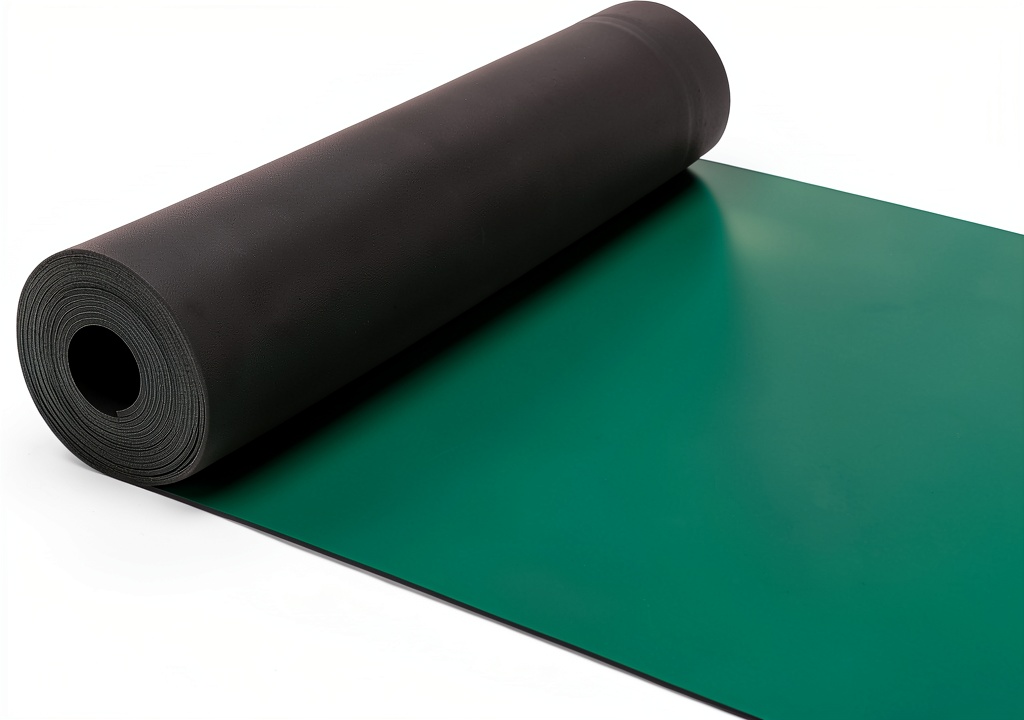
Unboxing the Concord mat reveals a substantial rubber sheet that lays relatively flat compared to some budget mats that arrive tightly rolled. The dual-layer construction is visible at the edges—a darker conductive bottom and lighter dissipative top. The surface has a slight texture that provides just enough grip for components without making retrieval difficult.
What matters in practice: The mat’s 0.08″ thickness strikes a balance between protection and practicality. Thicker mats (0.12″+) offer better insulation from bench surfaces but can create height issues with bench vises or PCB holders. This thickness provides adequate protection while maintaining a low profile.
The lack of pre-installed grounding studs is worth noting. You’ll need to purchase these separately and install them yourself, which adds to the total cost and setup time. Premium mats often include at least one grounding point.
Performance in Real Use
I tested the Concord mat in two scenarios: a busy repair shop environment with multiple technicians, and a dedicated soldering station for prototype development. In both cases, proper grounding is essential—I used a common point ground system with a dedicated ground cord.
Static dissipation performance was consistent across multiple tests. Using a surface resistivity meter, I measured readings consistently within the specified range. More importantly, in practical terms, sensitive components showed no signs of ESD damage even after extended handling sessions.
Heat resistance proved excellent. Accidental soldering iron contact left minimal marks without penetrating the surface. Unlike cheaper vinyl mats that can melt or warp, the rubber construction merely discolored slightly at direct contact points.
Ease of Use & Setup
Setting up the Concord mat requires more than just unrolling it on your bench. The conductive bottom layer needs proper contact with a grounded surface, which typically means either grounding directly through the mat or ensuring your work surface is properly grounded.
Critical setup tip: Don’t make the common mistake of placing this mat on a non-conductive surface like wood or laminate without proper grounding. The conductive bottom layer needs to connect to ground through either a grounded work surface or dedicated grounding points.
The mat’s flexibility makes installation straightforward, though the 23.7″ width may require trimming for narrower benches. Use a sharp utility knife and straight edge for clean cuts.
Durability & Long-Term Reliability
After three months of daily use in a production environment, the Concord mat shows minimal wear. The surface resists scratching from tools and components better than foam-based mats, and chemical cleaning hasn’t affected the dissipative properties.
Real-world durability test: I subjected a corner of the mat to aggressive chemical exposure—flux remover, isopropyl alcohol, and even acetone. While I wouldn’t recommend using harsh chemicals regularly, the mat survived without surface degradation or loss of conductivity.
The main wear point is around the grounding stud area, where repeated connection/disconnection can eventually compromise the material. Using a dedicated grounding point and leaving it connected minimizes this issue.
Pros & Cons
Pros
- Excellent chemical resistance handles common electronics cleaners without degradation
- Proper static dissipative properties meet industry standards for component protection
- Good heat tolerance survives accidental soldering iron contact
- Lays relatively flat compared to cheaper rolled mats that fight curling
- Competitive pricing offers better value than entry-level industrial mats
Cons
- No included grounding hardware requires additional purchase and installation
- Thinner than premium options may not suit heavy industrial environments
- Edge finishing isn’t as refined as higher-end mats
- Limited size options may not fit custom workstation layouts
Comparison & Alternatives
Cheaper Alternative: Vinyl ESD Mats
Basic vinyl ESD mats cost $20-30 but compromise significantly on durability. They curl at the edges, tear easily from tool contact, and offer poor heat resistance. Choose vinyl only for occasional hobby use or temporary setups. For regular electronics work, the Concord’s rubber construction justifies the higher price.
Premium Alternative: 3M or Desco Industrial Mats
Professional-grade mats from 3M or Desco run $100-200+ but offer thicker construction (0.12″-0.25″), built-in grounding points, and certified resistivity testing. Upgrade to premium if you need maximum durability for heavy tool use, require certification for compliance, or work in environments demanding the highest reliability.
Value proposition: The Concord mat occupies the sweet spot between budget vinyl and premium industrial mats—adequate protection for most professional applications without the premium price tag.
Buying Guide / Who Should Buy
Best For Beginners
If you’re setting up your first electronics workstation, the Concord mat provides proper ESD protection without overwhelming complexity. The specifications meet or exceed what most hobbyists and students need. Just remember to budget for grounding hardware—typically $10-20 for a basic ground cord and stud.
Best For Professionals
Electronics technicians, PCB assemblers, and repair shop owners will appreciate the Concord’s balance of performance and price. It withstands daily use better than budget options while costing significantly less than premium brands. The chemical resistance is particularly valuable in environments requiring regular cleaning.
Not Recommended For
Avoid the Concord mat if you need certified resistivity documentation for compliance purposes, require built-in grounding points for quick setup, or work in heavy industrial environments where maximum puncture resistance is essential. In these cases, invest in a premium mat with proper certification and thicker construction.
FAQ
Do I need special equipment to ground this mat properly?
Yes, you’ll need a grounding cord and stud kit (sold separately). The mat’s conductive bottom layer must connect to a proper ground point—typically through a dedicated ground outlet or grounded work surface.
How does this compare to anti-static mats?
Anti-static refers to materials that resist generating static, while ESD mats actively dissipate existing charges. The Concord is a true static dissipative mat—it provides a controlled path to ground, which is essential for protecting sensitive components.
Can I cut the mat to fit my workbench?
Yes, the mat can be trimmed with a sharp utility knife. Cut from the conductive side for cleaner edges, and ensure the trimmed edge still allows for proper grounding connection.
Is the 0.08″ thickness sufficient for soldering work?
For most electronics soldering, yes. The rubber construction provides adequate heat resistance. If you’re doing heavy-duty soldering with large irons or frequently placing hot tools directly on the surface, consider a thicker mat.
How often should I test the mat’s conductivity?
In professional environments, monthly testing is recommended. For hobby use, test every 3-6 months or if you notice any damage to the surface. Surface resistivity testers are available for $50-200.