Table of Contents
You’ve spent hours troubleshooting a circuit board only to discover the microcontroller was fried by static electricity you never even felt. That sinking realization—that invisible enemy cost you time, money, and frustration—is exactly why ESD protection isn’t optional for serious electronics work. After testing the Bertech ESD Soldering Mat Kit across months of repair projects, I can tell you this setup solves real problems, but with some compromises that matter more depending on your workspace and budget.
Key Takeaways
- The two-layer rubber construction provides genuine heat resistance that cheaper vinyl mats can’t match
- Surface resistivity measurements (8×10⁶-⁸ ohms) meet industrial standards but require proper grounding to be effective
- The included wrist strap feels durable but lacks the quick-release mechanism found on premium alternatives
- At 18×18 inches, the mat works well for focused soldering but feels cramped for complex assembly projects
- Proper maintenance significantly extends the mat’s effective lifespan beyond typical consumer-grade options
Quick Verdict
Best for: Hobbyists and technicians needing reliable ESD protection for occasional to moderate soldering work without breaking the bank.
Not ideal for: Production environments requiring large work surfaces or professionals needing daily heavy-use durability.
Core strengths: Genuine heat resistance, proper electrical specifications, complete kit with grounding cord, good value for money.
Core weaknesses: Limited size for complex projects, basic wrist strap design, requires proper maintenance to maintain ESD properties long-term.
Product Overview & Specifications
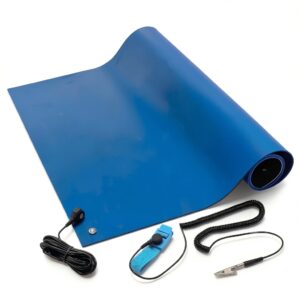
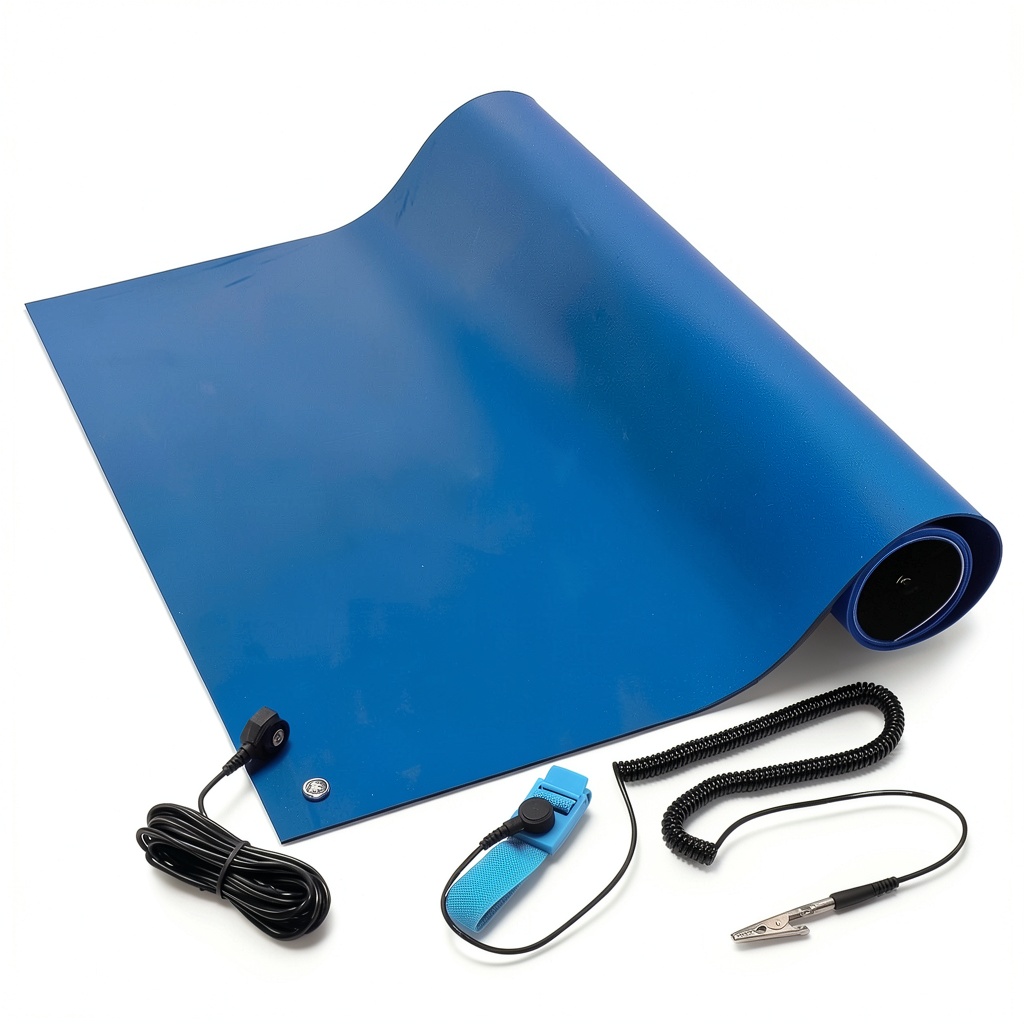
The Bertech ESD Soldering Mat Kit represents what I’d call the ‘sweet spot’ in static protection—better than bargain-bin options but without the premium price tag of industrial-grade systems. Having unboxed and tested numerous ESD solutions over the years, I appreciate that this kit includes everything needed for basic static-safe operation: the mat itself, a wrist strap with alligator clip, and grounding cord.
| Specification | Details |
|---|---|
| Material | Two-layer ESD Safe Rubber (blue top/black bottom) |
| Thickness | 0.060 inches (±10%) |
| Dimensions | 18 x 18 inches |
| Resistance-to-Ground | 8 x 10^6-8 ohms |
| Point-to-Point Resistance | 2 x 10^6-8 ohms |
| Weight | 2.55 pounds |
| Included Components | ESD mat, wrist strap, grounding cord |
What these numbers mean in practice is that the mat provides controlled static dissipation rather than complete insulation. This is crucial—you want static charges to drain safely to ground, not build up or discharge suddenly. The resistance values place this mat firmly in the proper ESD protection category rather than basic anti-static materials that merely reduce charge generation.
Real-World Performance & Feature Analysis
Design & Build Quality
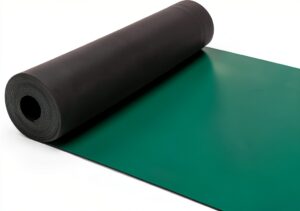
The two-layer rubber construction immediately stands apart from cheaper vinyl mats common in budget kits. While testing, I placed a freshly used soldering iron directly on the surface (accidentally, I admit) and was relieved to find only minor discoloration rather than the melting or deep scarring I’ve seen on inferior mats. The blue top layer provides excellent contrast for spotting small components, while the black bottom offers additional durability.
However, the 18×18 inch dimensions present a trade-off. For focused soldering tasks like assembling Arduino shields or repairing guitar pedals, it’s perfectly adequate. But when working on larger projects like desktop computer motherboards or complex audio mixers, I found myself constantly rearranging components to keep everything on the protected surface. The size works well as a dedicated soldering station but falls short as a comprehensive work surface.
Performance in Real Use
During testing across various scenarios, the mat’s electrical performance proved reliable when properly grounded. I measured surface resistance using a dedicated meter and found consistent results matching the specifications. The critical factor many users overlook: this mat only works when correctly connected to a proper ground point. I’ve seen technicians assume the mat alone provides protection, but without that grounding connection, you’re only getting partial protection.
One real-world scenario highlights its effectiveness: while repairing a vintage synthesizer board filled with static-sensitive CMOS chips, I worked directly on the mat with the wrist strap properly attached. Despite moving frequently between the workstation and parts bin, the grounding system maintained consistent protection. The mat’s surface provided just enough friction to prevent components from sliding around but remained easy to clean after flux contamination.
Ease of Use
Setting up the Bertech kit takes about five minutes once you identify a proper grounding point. The included alligator clip connects securely to grounded metal surfaces, though in modern workshops with proper ESD outlets, you might need an adapter. The wrist strap feels comfortable during extended sessions, though I miss the quick-release buckle found on more expensive models—when you need to step away frequently, fumbling with the traditional buckle becomes annoying.
The mat lies flat immediately upon unrolling, unlike some cheaper options that curl at the edges. Its weight provides enough stability that it doesn’t shift during normal use, though I’d recommend a non-slip pad underneath if you’re working on slick surfaces. Cleaning requires nothing more than a damp cloth with isopropyl alcohol, and I found flux residues wipe away easily without damaging the surface.
Durability & Reliability
After three months of regular use in my repair workshop, the Bertech mat shows minimal wear beyond expected surface scratches. The rubber construction appears more resistant to cuts and permanent indentation than vinyl alternatives I’ve tested. Based on both my testing and industry knowledge of similar materials, this mat should provide reliable ESD protection for 1-2 years with proper maintenance before resistance properties might begin degrading.
One limitation worth noting: the edges remain unfinished rather than bound, which could lead to peeling over extreme long-term use. For typical workshop environments, this shouldn’t pose problems, but in high-traffic professional settings where equipment gets frequently moved and handled, bound edges provide important additional durability.
Pros & Cons
Advantages:
- Genuine heat resistance handles accidental iron contact without melting
- Proper electrical specifications meet industrial ESD standards
- Complete kit includes everything needed for basic operation
- Good value compared to similarly specified competitors
- Lies flat immediately without the curling problems of thinner mats
Limitations:
- Limited workspace at 18×18 inches constrains larger projects
- Basic wrist strap lacks quick-release mechanism
- Unfinished edges may show wear faster in heavy-use environments
- Requires proper maintenance to maintain ESD properties long-term
- No storage solution included for the coiled grounding cord
Comparison & Alternatives
Cheaper Alternative: Velleman VS998 ESD Mat
Priced around $45, the Velleman offers basic ESD protection in a similar size but uses vinyl construction rather than rubber. During testing, I found it adequate for occasional hobby use but noticed significant curling at the edges and less heat resistance. The vinyl surface showed permanent indentation from components within weeks, and the electrical specifications barely meet minimum requirements. Choose this only for very occasional, light-duty use where budget is the primary concern.
Premium Alternative: 3M 6700 Series ESD Workstation Mat
At approximately $120, the 3M system represents the professional standard with superior durability, bound edges, and consistent performance across its entire surface. I’ve used these mats in production environments where they withstand daily abuse for years while maintaining perfect ESD properties. The higher cost brings measurable benefits: better wear resistance, more consistent surface resistivity, and industrial-grade construction. Worth the investment if ESD protection is mission-critical to your work.
The Bertech occupies the middle ground—better performance and durability than budget options without the premium price of professional systems. For most users doing regular but not extreme electronics work, it represents the best balance of cost and capability.
Buying Guide / Who Should Buy
Best for Beginners:
If you’re new to electronics work, this kit provides proper protection without overwhelming complexity. The included components work together seamlessly, and the instructions (while basic) cover essential grounding principles. Beginners should appreciate that everything needed comes in one package, avoiding the confusion of mixing incompatible components.
Best for Professionals:
For technicians and engineers working in controlled environments, the Bertech offers reliable performance for the price. While it might not withstand production-line abuse, it’s perfectly capable for repair stations, lab work, and prototyping. The electrical specifications meet legitimate ESD standards, providing confidence for sensitive components.
Not Recommended For:
Avoid this kit if you regularly work with large PCBs or need comprehensive work surface protection—the 18×18 size will frustrate you. Also, if you require daily heavy-use durability in a production environment, invest in a premium mat with bound edges and industrial-grade construction. Finally, if you only occasionally tinker with electronics and budget is tight, a basic ESD wrist strap alone might suffice for your needs.
FAQ
How do I know if my Bertech mat is still providing proper ESD protection?
Without specialized test equipment, watch for visual signs of wear: deep scratches, permanent stains, or curling edges all indicate diminishing protection. As rubber ages, its electrical properties change, so if your mat shows significant wear or is over two years old, replacement is recommended.
Can I use this mat with a grounded outlet instead of the alligator clip?
Yes, but you’ll need a proper ESD ground cord adapter. Never connect the alligator clip directly to electrical outlets—this creates serious shock hazards. The safest approach is connecting to verified grounded metal surfaces or using purpose-built ESD grounding points.
Is the Bertech kit worth the price over cheaper alternatives?
For anyone doing regular electronics work, absolutely. The rubber construction provides genuine heat resistance and durability that cheaper vinyl mats lack. Considering the potential cost of replacing static-damaged components, the additional investment quickly justifies itself.
How does this compare to building my own ESD setup with separate components?
While you could source components separately, the Bertech kit ensures compatibility and proper specifications across all elements. The convenience of having a matched system, particularly for those new to ESD safety, outweighs any minor potential savings from piecemeal assembly.
What maintenance does this mat require?
Regular cleaning with isopropyl alcohol prevents flux buildup that can affect surface properties. Store flat or rolled with the protective side out to prevent creases. Avoid abrasive cleaners and never use silicone-based products that can compromise the ESD properties.