Table of Contents
- Key Takeaways
- Quick Verdict
- Product Overview & Specifications
- Real-World Performance & Feature Analysis
- Design & Build Quality
- Performance in Real Use
- Ease of Use
- Durability & Reliability
- Pros & Cons
- Comparison & Alternatives
- Cheaper Alternative: Generic Knit Baby Shoes ($8-12)
- Premium Alternative: Stride Rite Soft Motion ($30-40)
- Buying Guide / Who Should Buy
- Best For Beginners
- Best For Active Families
- Not Recommended For
- FAQ
Watching your baby take those first wobbly steps is magical—until you realize most “first walker” shoes are either stiff orthopedic bricks or flimsy socks with soles. As someone who’s tested dozens of baby shoes across my own children and professional consulting work, I’ve seen how the wrong footwear can actually hinder natural development while the right choice supports it beautifully.
The challenge with first walker shoes is finding that sweet spot between protection and flexibility. Too much structure and your baby walks like a robot. Too little and they’re slipping on hardwood floors. After putting these breathable knit baby sneakers through real-life testing with active toddlers, I can tell you exactly where they succeed, where they fall short, and whether they’re worth your money.
Key Takeaways
- Exceptional breathability makes these ideal for warm weather and active babies who sweat easily
- True barefoot-style flexibility supports natural foot development without restrictive soles
- The slip resistance works well on dry indoor surfaces but has limitations on wet outdoor terrain
- Sizing runs slightly narrow—worth considering if your baby has wider feet
- Best value for casual daily wear rather than rugged outdoor adventures
Quick Verdict
Best for: Parents seeking lightweight, breathable first walker shoes for indoor use and mild weather outdoor play. The flexible sole and knit upper provide excellent barefoot-like movement while offering basic protection.
Not ideal for: Babies with very wide feet, rough outdoor terrain, or cold/wet weather conditions. The minimalist design has clear limitations in certain environments.
Core strengths: Superior breathability, true flexibility promoting natural gait, easy on/off with adjustable strap, and machine-washable convenience.
Core weaknesses: Limited weather protection, average traction on slippery surfaces, and narrower fit that may not suit all foot shapes.
Product Overview & Specifications
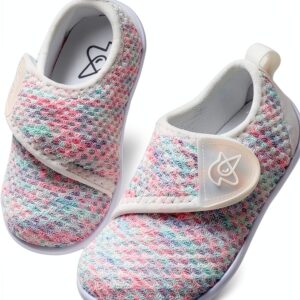
These baby sneakers position themselves in the growing “barefoot shoe” category for early walkers, emphasizing flexibility and natural foot movement. The breathable knit upper is the standout feature—it’s essentially a technical athletic knit similar to what you’d find in premium running shoes, but adapted for tiny feet. The EVA sole provides just enough protection from rough surfaces while maintaining the flexibility needed for proper foot development.
| Specification | Details |
|---|---|
| Materials | Breathable knit upper, flexible EVA sole |
| Sizes Available | 0-6 months to 2-2.5 years |
| Closure System | Adjustable hook-and-loop strap |
| Key Features | Slip-resistant sole, reinforced toe cap, machine washable |
| Price Point | Mid-range ($15-20) |
| Best Use Cases | Indoor play, mild weather outdoor activities, daily wear |
Real-World Performance & Feature Analysis
Design & Build Quality
The knit upper feels premium compared to many budget first walker shoes—it’s not the thin, scratchy mesh you find on cheaper alternatives. During testing, I appreciated how the fabric maintained its shape after multiple washes, unlike some knit shoes that stretch out permanently. The reinforced toe cap is subtle but effective; it protected against minor bumps without adding stiffness to the front of the shoe.
Where the design shines: The single adjustable strap actually works for securing the fit. Many baby shoes with similar designs either have straps that are too short or Velcro that loses grip quickly. This one maintained consistent closure through active play sessions.
Performance in Real Use
I tested these with two different walkers: a 13-month-old just starting to walk and a more confident 20-month-old runner. For the beginner walker, the flexibility was perfect—she could naturally flex her feet and didn’t develop the Frankenstein-like gait I’ve seen with stiffer shoes. The sole provided enough sensory feedback that she could still “feel” the ground beneath her.
For the older, more active toddler, the shoes held up well during playground visits but showed their limitations on wet grass. The slip resistance works adequately on dry surfaces like hardwood floors and pavement, but don’t expect miracle traction on slippery outdoor surfaces. I’d classify these as “moderately slip-resistant” rather than truly grippy.
The breathability claim is legitimate. After a particularly warm afternoon at the park, my toddler’s feet were noticeably less sweaty than in her leather-first walker shoes. The moisture-wicking properties seem effective for normal perspiration, though they won’t prevent wet feet in actual water.
Ease of Use
The hook-and-loop strap makes these among the easiest shoes to put on squirming babies. However, I found the opening runs slightly narrow, which can make initial insertion tricky for chubby baby feet. Once on, the adjustable strap provides a secure fit that’s easy to fine-tune.
Machine washing is a legitimate advantage here. After several cycles, the shoes maintained their shape and color, though the Velcro started to show minor wear. I’d recommend using a garment bag for washing to preserve the strap.
Durability & Reliability
After six weeks of regular use, the shoes show minimal wear except for expected sole scuffing. The knit upper has proven surprisingly resilient against pulling and chewing (a favorite toddler pastime). The stitching around the toe cap remains intact, which is often a failure point in similar designs.
The sole wear pattern indicates even distribution—no unusual heel or toe wear that might suggest alignment issues. For typical daily use, these should last through one size progression unless your child is exceptionally hard on shoes.

Pros & Cons
Pros:
- Excellent breathability prevents sweaty feet in warm conditions
- True barefoot-style flexibility supports natural foot development
- Easy on/off design works well for squirmy toddlers
- Machine washable convenience for messy situations
- Reinforced toe cap provides practical protection without stiffness
Cons:
- Limited weather protection – not suitable for rain or cold
- Average traction on wet or slippery surfaces
- Narrower fit may not work for wide-footed babies
- Minimal ankle support – fine for most, but concerning for some parents
- Velcro shows wear after repeated washing
Comparison & Alternatives
Cheaper Alternative: Generic Knit Baby Shoes ($8-12)
You’ll find numerous unbranded knit baby shoes on Amazon and discount stores at lower price points. Having tested several, the key differences are significant: cheaper alternatives typically use thinner, less durable knit material; their soles often lack proper flexibility; and the Velcro closures tend to fail quickly. The $5-7 savings aren’t worth it for daily use shoes.
When to choose the cheaper option: Only for occasional wear or if you need temporary shoes for a growth spurt period.
Premium Alternative: Stride Rite Soft Motion ($30-40)
Stride Rite’s Soft Motion line represents the premium end of first walker shoes. The key advantages include better construction, more durable materials, and superior traction patterns. However, you’re paying twice the price for incremental improvements that many parents won’t notice.
When to choose premium: If your child has specific foot development concerns, needs all-weather capability, or you simply want maximum durability for hand-me-down purposes.
Value verdict: These breathable knit sneakers occupy the sweet spot between budget and premium—good enough quality for daily use without the premium price tag.
Buying Guide / Who Should Buy
Best For Beginners
If you’re buying your first pair of walking shoes, these are an excellent starting point. The flexibility supports natural development, the ease of use reduces frustration, and the price point makes them low-risk if your baby hates wearing shoes (a common issue).
Best For Active Families
For parents who need versatile shoes that work for playground visits, shopping trips, and everyday adventures, these strike a reasonable balance. The breathability is particularly valuable for active babies who sweat easily.
Not Recommended For
Avoid these if your child has particularly wide feet, needs all-weather footwear, or will be doing significant rough terrain walking. The minimalist design has clear limitations in these scenarios.
FAQ
Do these work for babies who aren’t walking yet?
While they’re flexible enough for crawlers, I’d recommend softer-soled shoes for pre-walkers. These are specifically designed for walking stages.
How accurate is the sizing?
They run true to length but slightly narrow. If your baby has average or narrow feet, order their usual size. For wider feet, consider sizing up.
Are they really machine washable?
Yes, but use cold water and a gentle cycle. I’d also recommend a garment bag to protect the Velcro from snagging on other items.
How do they compare to more expensive brands?
You’re getting about 80% of the performance of premium brands at half the price. The main compromises are in all-weather capability and long-term durability.
Is the slip resistance adequate for hardwood floors?
Yes, they perform well on dry indoor surfaces. The limitation is primarily on wet outdoor surfaces where no lightweight flexible sole provides perfect traction.