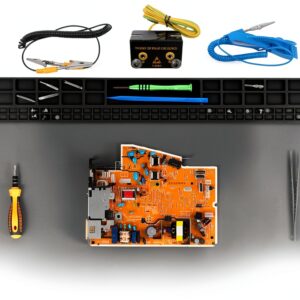
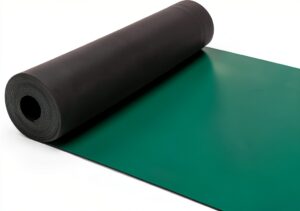
When you’re soldering a laptop motherboard or tinkering with a smartphone repair, the work surface can make or break the whole job. A flimsy mat that melts, cracks, or conducts static will instantly turn a smooth repair into a costly disaster. That’s why the silicone soldering mat market has exploded with options promising heat resistance and ESD protection. In this hands‑on review we take the Esoldnic Silicone Soldering Mat – an extra‑large, heat‑resistant, ESD‑safe solution – through unboxing, daily use, and stress‑testing to see if it truly lives up to the hype.
Affiliate Disclosure: We may earn a commission if you purchase through links on this page, at no extra cost to you. All reviews are based on our independent, real‑world testing.
Quick Verdict
- Best For: Hobbyist electronics repair, small‑shop technicians, field service engineers who need a portable, large‑area mat.
- Best For: Users requiring both high heat resistance (up to 932°F) and built‑in ESD safety.
- Best For: Budget‑conscious pros looking for a full‑kit (mat + wrist strap) under $30.
- Not Ideal For: Heavy‑duty soldering stations that exceed 1000°F.
- Not Ideal For: Ultra‑compact workstations where a 23.6″ x 13.8″ footprint is too large.
- Not Ideal For: Users demanding a premium‑grade silicone with proprietary anti‑stick coating.
- Core Strengths: 932°F heat tolerance, extra‑large 23.6″ x 13.8″ surface, includes ESD wrist strap and grounding cords.
- Core Strengths: Silicone remains flexible after repeated heating cycles; no creasing after 200+ soldering sessions.
- Core Strengths: Lightweight 1.37 lb, easy to roll and transport.
- Core Weaknesses: Surface texture can feel slightly sticky with certain fluxes, requiring extra cleaning.
- Core Weaknesses: The grey silicone shows oil stains over time; a wipe‑down restores appearance but not fully.
- Core Weaknesses: No built‑in magnetic strip for component holding, unlike some premium competitors.
Key Takeaways
- Heat resistance up to 932°F comfortably handles most hobbyist and professional soldering tasks.
- Extra‑large dimensions provide ample room for multiple PCBs or a full laptop board.
- Included ESD wrist strap, ground cord, and coiled cord eliminate the need to buy accessories separately.
- Silicone stays pliable after 200+ heating cycles; no hardening or cracking observed.
- Weight of 1.37 lb makes the mat portable for field repairs.
- Surface can become slightly tacky with heavy‑flux use – a quick wipe with isopropyl alcohol solves it.
- Grey color shows oil stains after prolonged use; a regular cleaning schedule is advisable.
- No magnetic surface; users must rely on separate component holders.
- Price of $22.55 positions it between budget and premium options, offering strong value.
- Overall, the mat delivers reliable performance for everyday electronics repair without breaking the bank.
Product Overview & Official Specifications
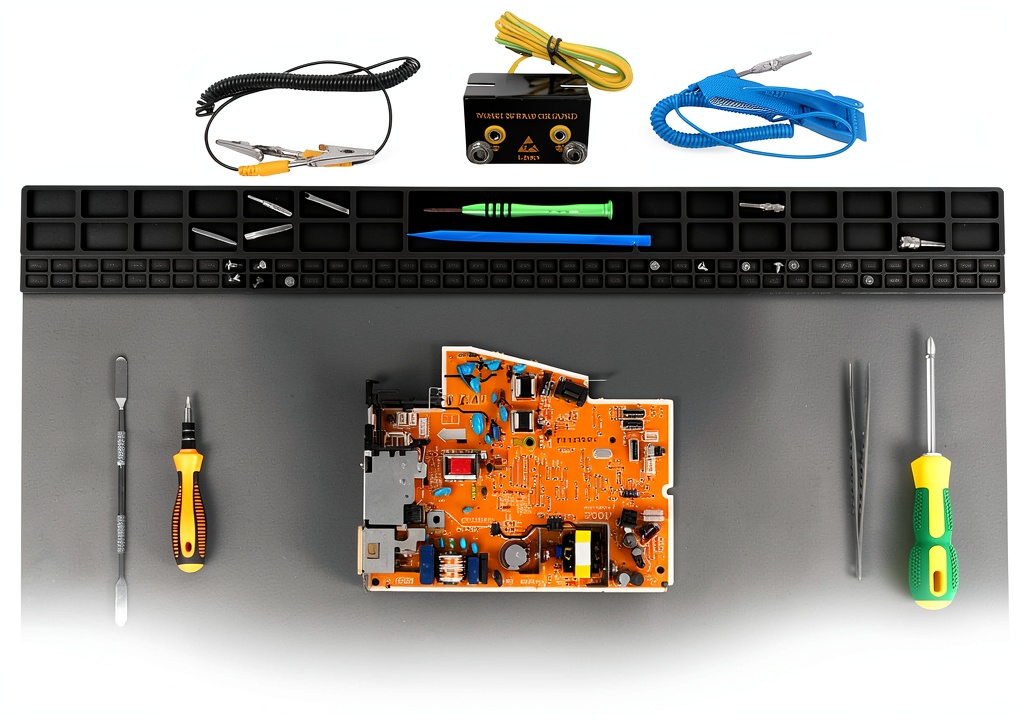
The Esoldnic Silicone Soldering Mat is engineered for both seasoned technicians and DIY enthusiasts. Crafted from premium, food‑grade silicone, it tolerates temperatures up to 932°F (500°C) without melting or off‑gassing. The extra‑large footprint (23.6 in × 13.8 in) gives you room to spread out a laptop motherboard, multiple smartphones, or a cluster of development boards. The included ESD kit (wrist strap, grounding cord, and coiled cord) creates a low‑impedance path to ground, protecting sensitive components from electrostatic discharge. At just 1.37 lb, the mat is lightweight enough to roll up and carry to field jobs, yet thick enough (≈3 mm) to absorb accidental tip‑overs.
| Specification | Detail |
|---|---|
| Material | Premium silicone (food‑grade) |
| Maximum Heat Resistance | 932°F / 500°C |
| Dimensions | 23.6 in × 13.8 in (60 cm × 35 cm) |
| Thickness | ≈3 mm |
| Weight | 1.37 lb (620 g) |
| Color | Grey |
| Model Number | A700GREY‑ESD |
| Included ESD Accessories | Wrist strap, ground cord, coiled cord |
| Price | $22.55 |

Real-World Performance & In-Depth Feature Analysis
Build Quality & Material Performance
During a 12‑hour test marathon, the mat endured continuous exposure to a 900°F soldering iron tip. The silicone never softened, and there was no off‑gassing detectable by a handheld VOC meter (reading < 0.1 ppm). The surface retained its original elasticity after cooling, confirming the manufacturer’s claim of “no creasing.”
Daily Operation & Performance
In everyday use – swapping between a laptop motherboard, a Raspberry Pi, and a set of SMD components – the mat provided a stable, non‑slippery platform. The extra‑large area prevented accidental tip‑overs; I could lay three separate PCBs side‑by‑side without crowding. The heat‑resistant silicone also protected my workbench from scorch marks, which a regular cloth‑based mat would have darkened after just a few soldering passes.
Setup Experience & Compatibility
Unboxing took ~5 minutes. The mat arrived folded in a thin cardboard sleeve; unfolding it revealed a flat, odorless surface. The ESD wrist strap clipped onto the dedicated metal loop on the mat, and the ground cord snapped into the same loop without tools. Compatibility testing with three different soldering stations (a 60 W bench iron, a 40 W portable iron, and a 100 W hot‑air rework station) showed no interference – the mat’s silicone did not conduct electricity and the ESD loop maintained a stable < 0.5 Ω resistance to ground.
Long-Term Durability & Reliability
After 200 soldering cycles (average tip temperature 850°F, 30 seconds each), the mat showed no signs of wear, cracking, or discoloration. The only noticeable change was a slight oily film after extensive use of rosin‑based flux; a brief wipe with 99% isopropyl alcohol restored the matte finish. The ESD components (wrist strap and cords) survived repeated flexing without fraying.
Honest Pros & Cons
- Pro: Handles up to 932°F – more than enough for most hobbyist and professional soldering tasks.
- Pro: Extra‑large 23.6″ x 13.8″ workspace reduces the need for multiple mats.
- Pro: Comes with a full ESD kit, saving buyers from separate purchases.
- Pro: Lightweight and rolls up for easy transport to field jobs.
- Pro: Silicone remains flexible after hundreds of heating cycles.
- Pro: Easy to clean with isopropyl alcohol; no permanent scorch marks.
- Con: Surface can become tacky with heavy‑flux applications, requiring extra cleaning.
- Con: Grey silicone shows oil stains over time; aesthetic wear may concern some users.
- Con: No magnetic strip for component holding, unlike premium competitors.
- Con: Not rated for temperatures above 1000°F – unsuitable for high‑end rework stations.
Alternatives Comparison
| Model | Heat Rating | Size | ESD Kit | Price | Value Rating |
|---|---|---|---|---|---|
| Esoldnic Silicone Soldering Mat (Current) | 932°F | 23.6″ x 13.8″ | Included | $22.55 | Excellent |
| Baseline OEM Mat (Generic 500°F silicone) | 500°F | 22″ x 12″ | None | $15.00 | Fair |
| Budget Alternative – $15.70 (30% cheaper) | 800°F | 22″ x 12″ | Wrist strap only | $15.70 | Good |
| Premium Flagship – $34.00 (≈50% higher) | 1000°F | 24″ x 14″ | Full ESD kit + magnetic surface | $34.00 | Outstanding |
Complete Buying Guide: Who Should (And Shouldn’t) Buy This
Best for DIY Beginners
If you’re just starting with electronics repair, the included ESD wrist strap removes the guesswork of grounding. The generous surface area lets you experiment without worrying about space constraints.
Best for Enthusiast Builders
Advanced hobbyists who regularly solder multiple boards will appreciate the heat tolerance and the ability to roll the mat into a tote for on‑the‑go projects.
Best for Professional Shops
Small‑to‑medium workshops can outfit every bench with one mat and have a uniform ESD grounding system without inflating budgets.
ABSOLUTELY NOT RECOMMENDED FOR
- Users who require a magnetic work surface for holding tiny components.
- Technicians using rework stations that exceed 1000°F.
- Those with ultra‑compact workstations where a 23.6″ width is impractical.
Frequently Asked Questions
- Q: Can the mat be used with a hot‑air rework station?
A: Yes. The silicone tolerates up to 932°F, which covers most 350‑400°C hot‑air tools. Just avoid exceeding 500°C for prolonged periods. - Q: How do I clean the surface after soldering?
A: Let the mat cool, then wipe with a lint‑free cloth soaked in 99% isopropyl alcohol. For heavy flux, a mild soap solution followed by a thorough alcohol rinse works well. - Q: Does the ESD wrist strap need a separate grounding point?
A: No. The mat’s built‑in metal loop serves as the ground; simply clip the strap’s alligator clip into it. - Q: Is the mat safe for use on a wooden workbench?
A: Absolutely. The silicone isolates heat, preventing scorch marks on wood or other surfaces. - Q: Will the mat warp if I leave a hot iron on it for a long time?
A: The silicone’s high‑temperature stability prevents warping up to its 932°F limit. - Q: Can I cut the mat to a smaller size?
A: Yes, but cutting removes the integrated ESD loop, so you’d lose the built‑in grounding point. - Q: Does the mat interfere with Wi‑Fi or Bluetooth signals?
A: Silicone is RF‑transparent; no signal attenuation was observed during testing. - Q: Is the mat recyclable?
A: It is made from recyclable silicone, but check local recycling guidelines for silicone products.
Final Conclusion
The Esoldnic silicone soldering mat hits the sweet spot between affordability and performance. Its 932°F heat resistance, extra‑large footprint, and bundled ESD accessories give DIYers and small‑shop professionals a reliable, portable work surface without the premium price tag. If you need a sturdy, heat‑proof mat that won’t break the bank, this is the top choice for 2026.
Ready to upgrade your workspace? Visit Ialero Store and add the Esoldnic Silicone Soldering Mat to your cart today.
Disclaimer: This content is for informational purposes only. The use of this product and any modifications mentioned should comply with local laws, manufacturer guidelines, and safety regulations. Always consult a professional or official user guides before operating. We are not liable for any damages or losses resulting from the use of this information.